Cast Iron Plumbing in Mid-Century Dallas Homes: What Renovations Hide
Cast Iron Plumbing in Mid-Century Dallas Homes: What Renovations Hide
There is a lot of appeal in buying an older home in Dallas. Mid-century neighborhoods offer mature trees, larger lots, and character you simply cannot find in new construction. Many of these homes from the 1950s, 60s, and early 70s have been beautifully renovated. You walk in and see fresh paint, modern luxury vinyl plank flooring, and a completely updated kitchen.
But cosmetic updates do not fix what is buried under the foundation.
If a home was built before the mid-1970s, it was almost certainly built with cast iron plumbing. Cast iron was the industry standard for decades, and it was installed with the assumption that it would last forever. The reality is that the functional lifespan of cast iron pipe is about 50 years.
If you are buying a 60-year-old home with its original cast iron plumbing, you are buying a system that is past its expiration date.
How We Spot Cast Iron Before We Go Inside
We start looking for plumbing clues before we even walk through the front door.
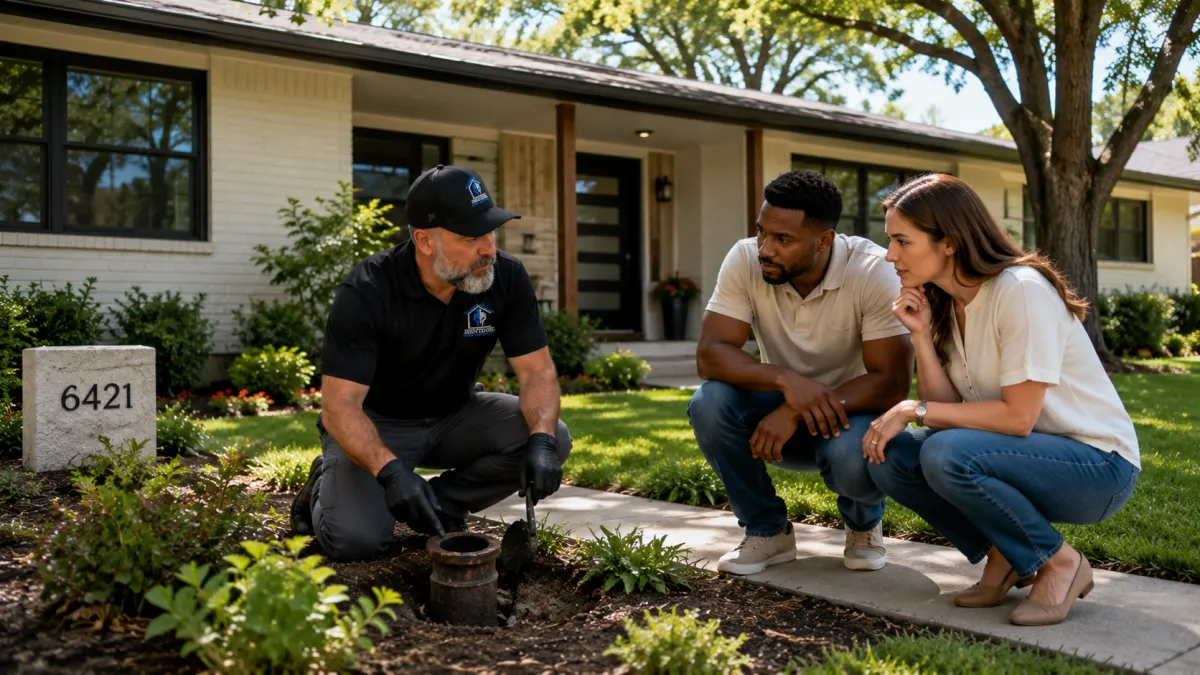
The first place we look is the yard. We are hunting for the drain cleanouts. These are usually four-inch pipes sticking out of the ground, often located in the flowerbeds in the front or back of the house, or sometimes on the side in older homes. If those cleanout pipes are cast iron rather than white PVC, we know what we are dealing with.
Next, we look at the roof. The plumbing system requires vent pipes that extend up through the roof to allow sewer gases to escape. If the plumbing has not been fully retrofitted to PVC, we will see heavy, rusted cast iron vent pipes protruding from the roofline.
The Warning Signs Inside
Once inside, we test the plumbing fixtures. We run water in the sinks, tubs, and showers, and we flush the toilets.
We are looking for slow drains. If the water takes too long to clear the basin, or if we hear a distinct gurgling sound coming from the drains when a toilet is flushed, those are strong indicators of a compromised cast iron system.
Unlike modern PVC pipe, which is smooth on the inside and flexes slightly, cast iron is rigid and rough. Over decades of use, cast iron deteriorates. The pipes can separate and crack. More importantly, the interior walls of the pipe hold onto mineral deposits. Over time, those deposits build up, catching debris and waste, severely narrowing the passage for water to flow through. That is what causes the slow draining and the backups.
The Sewer Scope Solution
Because the most critical parts of the plumbing system are buried under the concrete slab or deep in the yard, a visual inspection can only tell us so much.
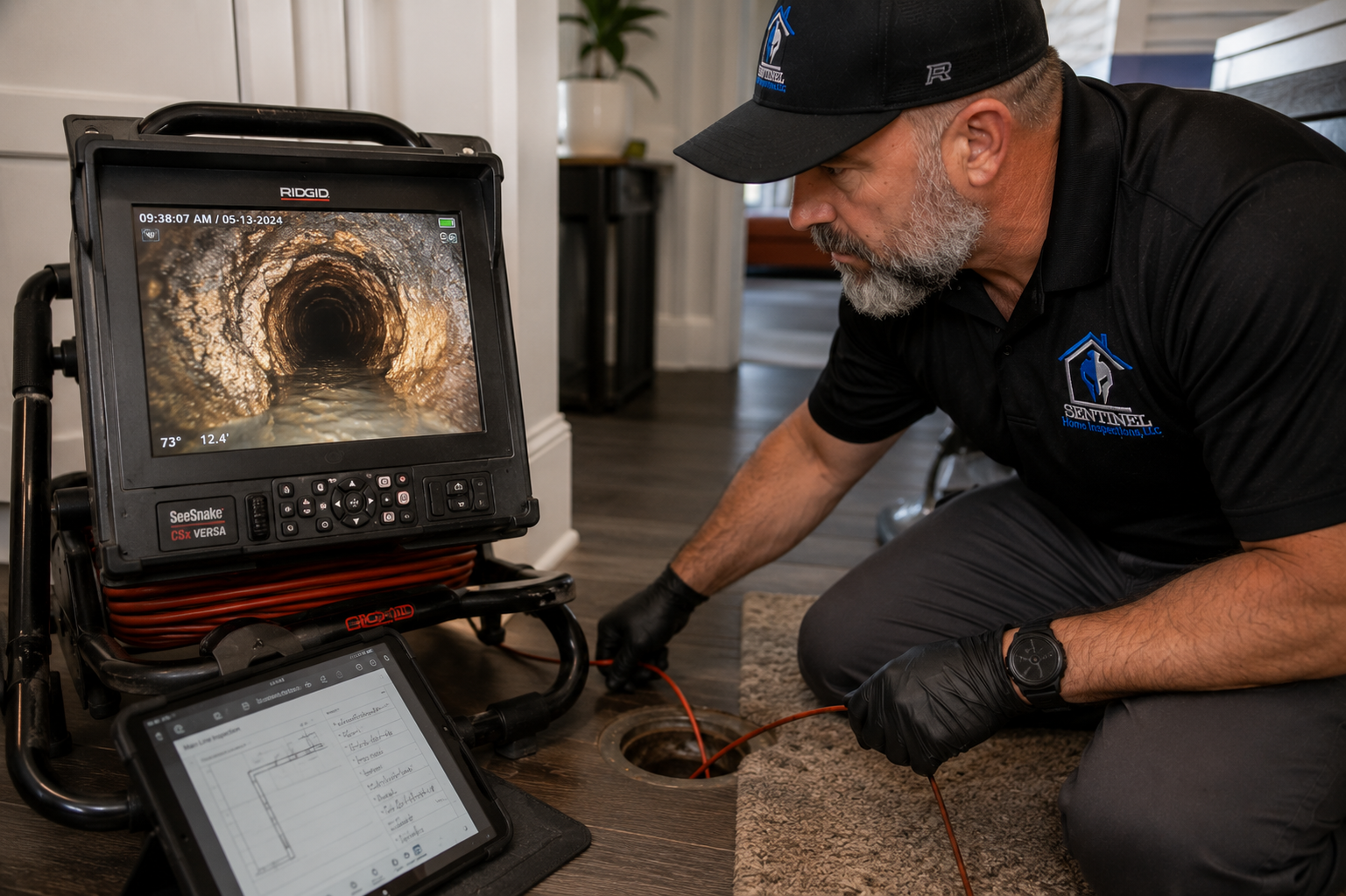
That is why we utilize sewer camera inspections, and we strongly recommend them for any older home, especially those with known cast iron plumbing. A sewer scope allows us to run a high-definition camera directly into the main sewer line. We can see the exact condition of the pipe interior. We can identify root intrusions, belly sags where water pools, severe mineral buildup, and cracks in the cast iron itself.
Replacing cast iron plumbing under a slab foundation is a massive, disruptive, and expensive project. It often involves trenching through the floors of the home.
If you are falling in love with a beautifully renovated mid-century home in Dallas, make sure you know what is happening underground. Schedule your inspection with Sentinel Home Inspections and ask about adding a sewer scope. It is the only way to know for sure.
Kyle Hamilton is a TREC Licensed Inspector and InterNACHI Certified Professional Inspector serving the Dallas-Fort Worth area. Sentinel Home Inspections LLC | License #25351.


