EIFS Synthetic Stucco: Why This Popular DFW Siding Traps Water Behind the Walls
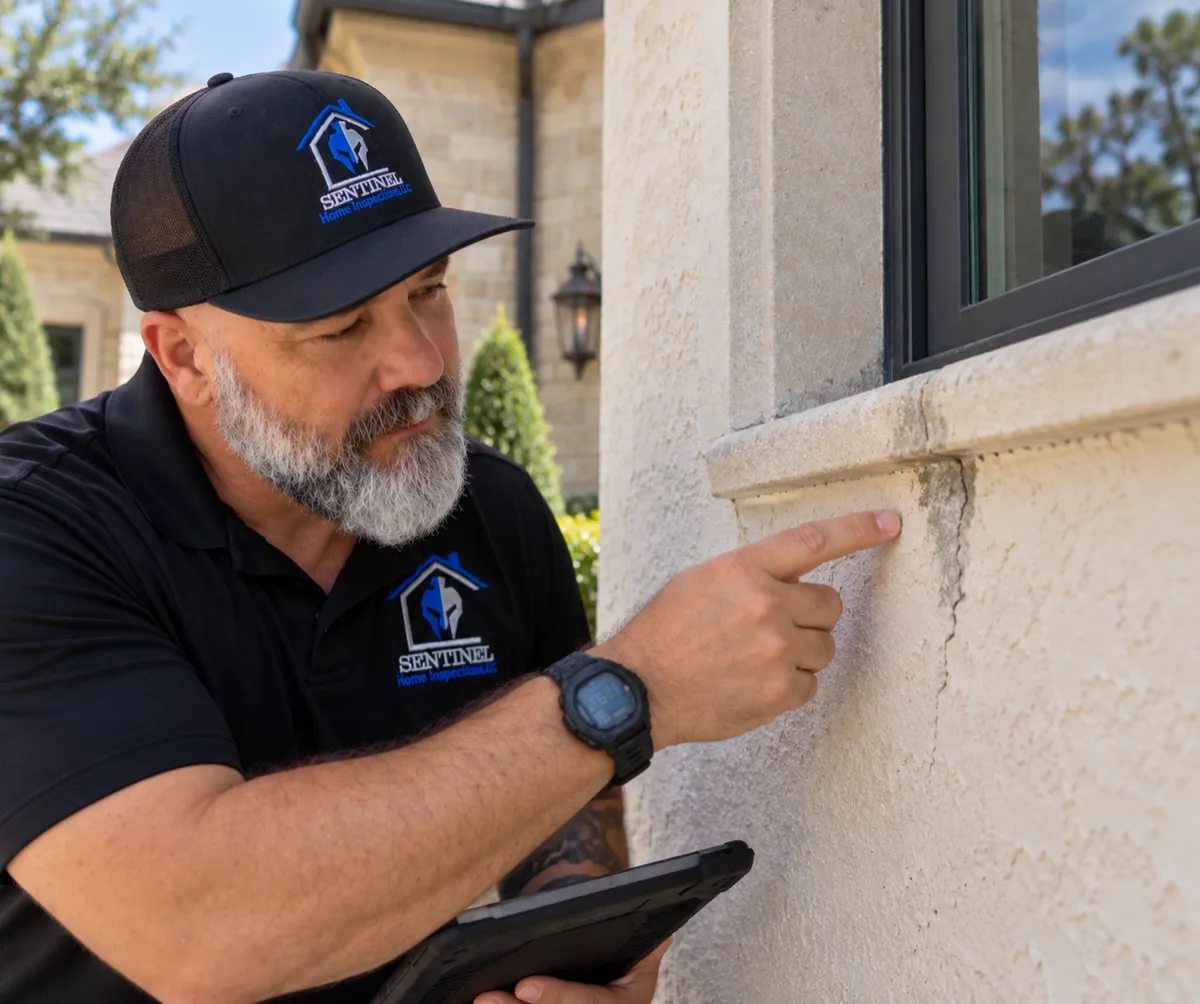
EIFS synthetic stucco shows up often on custom builds in Southlake and Colleyville from the late 1990s and 2000s. It looks flawless from the curb. The risk is entirely in what the finish hides.
Why EIFS Hides Damage So Well
EIFS is engineered to be waterproof on its outer layer, and that's exactly why problems go unnoticed for so long. Water doesn't show up on the surface until it finds a way behind the wall, usually through a crack or a gap around a penetration like a window, door, light fixture, or roofline. By the time a stain becomes visible, the wood framing underneath may already be rotting.
The Visual Tells Worth Checking
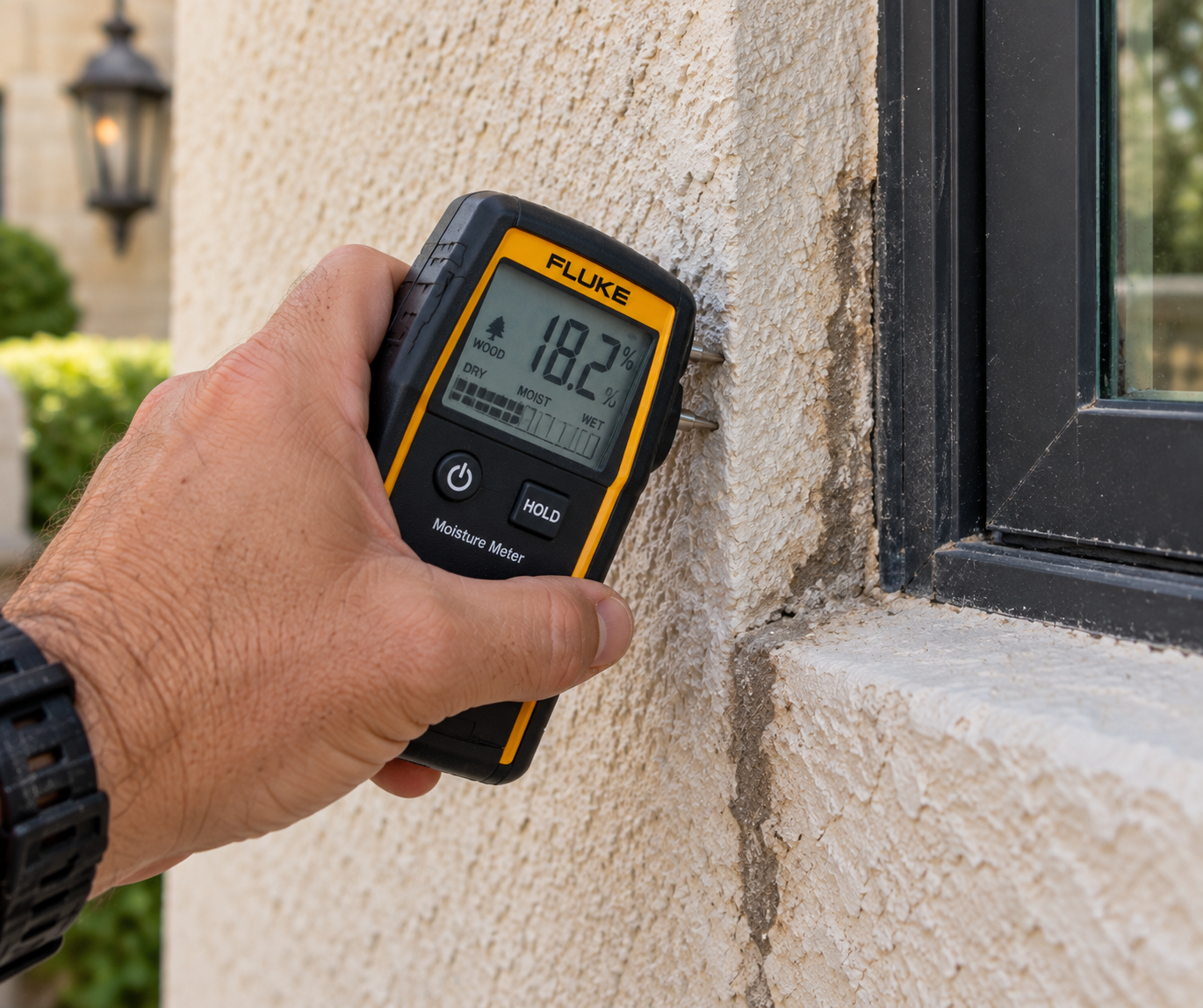
The signs to watch for are hairline cracks, bulging sections, and dark streaky stains clustered around windows, doors, and roof lines. These are the spots where water is most likely finding its way in.
One detail worth knowing: if the sealant at the bottom edge of the wall is failing, especially where the EIFS sits close to or directly on the soil, water is almost certainly accumulating behind the wall even before any stain appears. That's a spot worth checking with a moisture meter any time something looks questionable.
Schedule your inspection with Sentinel Home Inspections and ask about moisture testing on any EIFS-clad home before you buy.
Kyle Hamilton is a TREC Licensed Inspector and InterNACHI Certified Professional Inspector serving the Dallas-Fort Worth area. Sentinel Home Inspections LLC | License #25351.