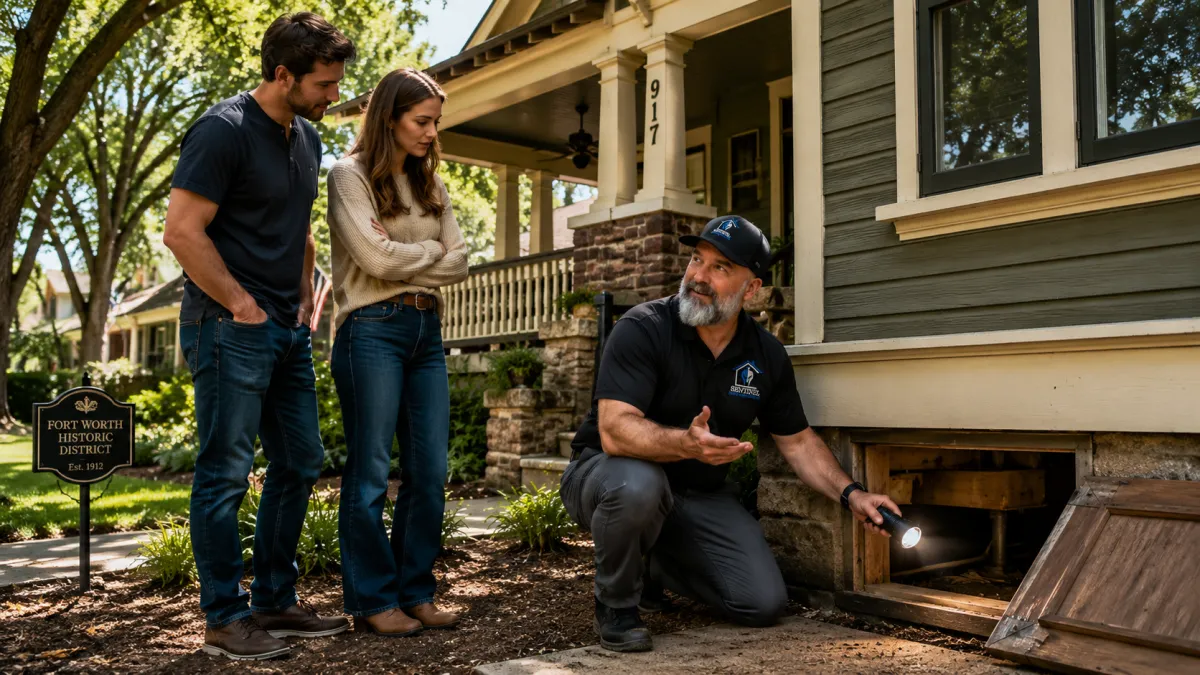
Pier and Beam Foundations in Historic Fort Worth: What Lies Beneath
Pier and Beam Foundations in Historic Fort Worth: What Lies Beneath
If you are buying a historic home in Fort Worth, or in one of the older, established neighborhoods of Dallas, you are likely buying a home with a pier and beam foundation. These homes have incredible character, beautiful hardwood floors, and a structural system that is completely different from the concrete slabs used in modern construction.
A pier and beam foundation means the house sits elevated off the ground, supported by a series of piers and wooden beams, creating a crawl space underneath.
When we inspect these older homes, the crawl space is where the real story of the house is told. It is a dark, tight, and often unpleasant environment, but it is absolutely critical to the health of the home. Here is what we are looking for when we drop into the dark.
Inspecting the Supports
The first thing we evaluate is the support system itself. We look at the piers. Sometimes we find older cinder block piers, but most of the time we see concrete cylinders that were poured in place.
We trace the wooden beams that rest on those piers, ensuring that the beams are fully supported and actually touching the concrete. Over decades of settling, it is common for homes to be adjusted or leveled. When that happens, shims are added between the concrete pier and the wooden beam. We check to ensure those shims are made of the proper material (usually steel or hardwood, never soft wood or cardboard) and that they are secure.
The Threat of Moisture
The biggest enemy of a pier and beam foundation is moisture. When we get down into a crawl space, we can often smell a moisture problem before we see it. A damp, mildewy, or moldy odor is an immediate red flag.
We inspect the soil floor of the crawl space. In the Texas climate, a crawl space should have a vapor barrier a layer of heavy plastic sheeting covering the soil. This barrier prevents ground moisture and humidity from rising up and coming into contact with the wooden sub-flooring and beams.
We also look for standing water. There should be no areas under the home where water accumulates and pools after a rainstorm. We check the perimeter to ensure the crawl space has the proper amount of ventilation holes to allow air to circulate and keep the environment dry.
Plumbing and Pests
Because the plumbing system is exposed in the crawl space, it is the perfect place to check for leaks. We inspect the pipes, looking for drips, corrosion, or areas where moisture has damaged the surrounding wood.
Finally, we are hunting for pests, specifically termites and other wood-destroying insects. The crawl space is an ideal environment for them. They prefer soft wood, and if there is a moisture problem under the home, that damp wood becomes incredibly soft and inviting. We look for mud tubes on the concrete piers and signs of damage in the beams.

Don't Skip the Crawl Space
A historic home with a well-maintained pier and beam foundation can last for generations. But a neglected crawl space can lead to structural failure, severe mold issues, and massive repair bills.
If you are buying an older home in DFW, you need an inspector who is willing to get dirty and thoroughly evaluate what lies beneath the floorboards. Schedule your inspection with Sentinel Home Inspections and let us give you the complete picture.
Kyle Hamilton is a TREC Licensed Inspector and InterNACHI Certified Professional Inspector serving the Dallas-Fort Worth area. Sentinel Home Inspections LLC | License #25351.


