Spray Foam Attics in DFW: Energy Savings or Hidden Moisture Trap?
Spray foam insulation shows up more and more in new DFW construction, largely because it holds up well against Texas heat. It also comes with a tradeoff most buyers never hear about until something goes wrong.
Why Spray Foam Hides Roof Leaks Instead of Showing Them#
In a standard attic, a roof leak eventually shows up as a stain on the wood decking, which is easy for an inspector to spot. Spray foam changes that. The foam is applied directly against the underside of the roof decking, so if water gets in, it can become trapped between the foam and the wood. Instead of drying out, the foam holds moisture against the wood like a sponge, and rot can spread for months without ever producing a visible stain.
How We Actually Check a Spray Foam Attic#
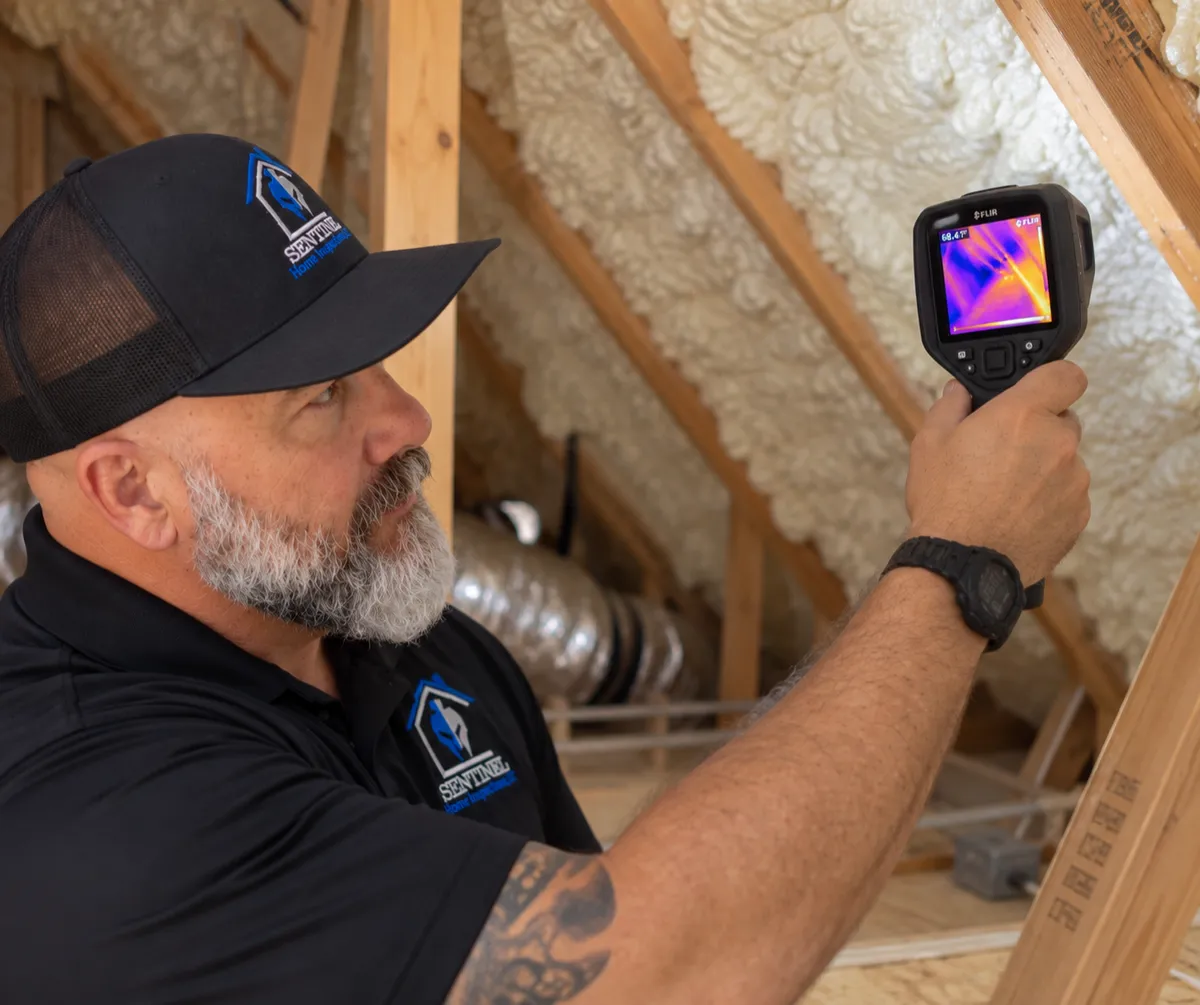
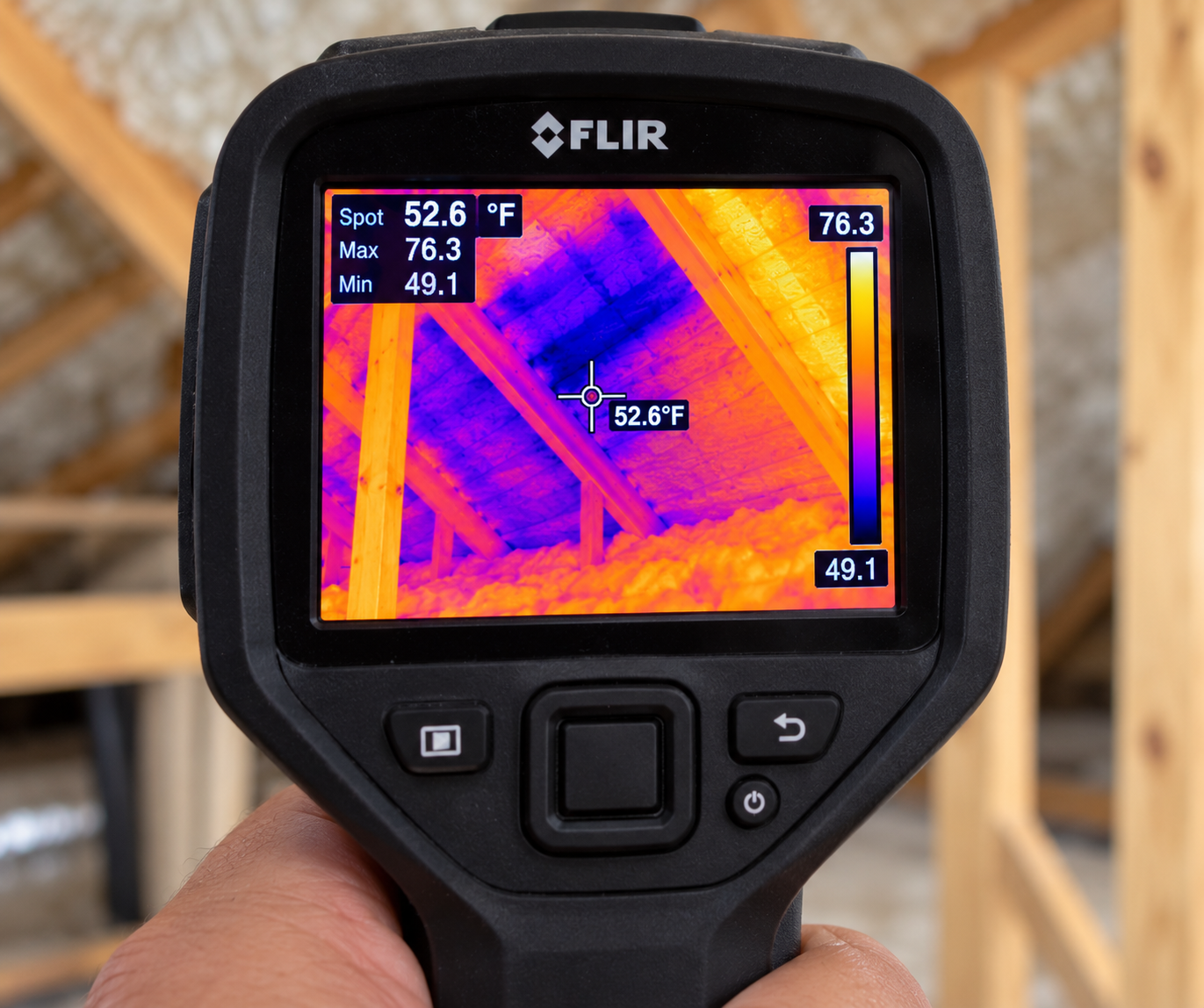
Since we can't rely on looking for stains in a spray foam attic, the inspection has to work differently. A thermal imager and a moisture meter get used to scan the attic for areas holding moisture that wouldn't otherwise be visible. Soft or sagging spots in the foam, along with the areas around roof penetrations like vents and pipe boots, get extra attention.
If your home has a spray foam attic, ask whether your inspector used thermal imaging and a moisture meter during the roof and attic inspection. It's the only reliable way to catch a hidden leak before it becomes a much bigger repair.
Schedule your inspection with Sentinel Home Inspections and ask about thermal imaging for any spray foam attic.
Kyle Hamilton is a TREC Licensed Inspector and InterNACHI Certified Professional Inspector serving the Dallas-Fort Worth area. Sentinel Home Inspections LLC | License #25351.